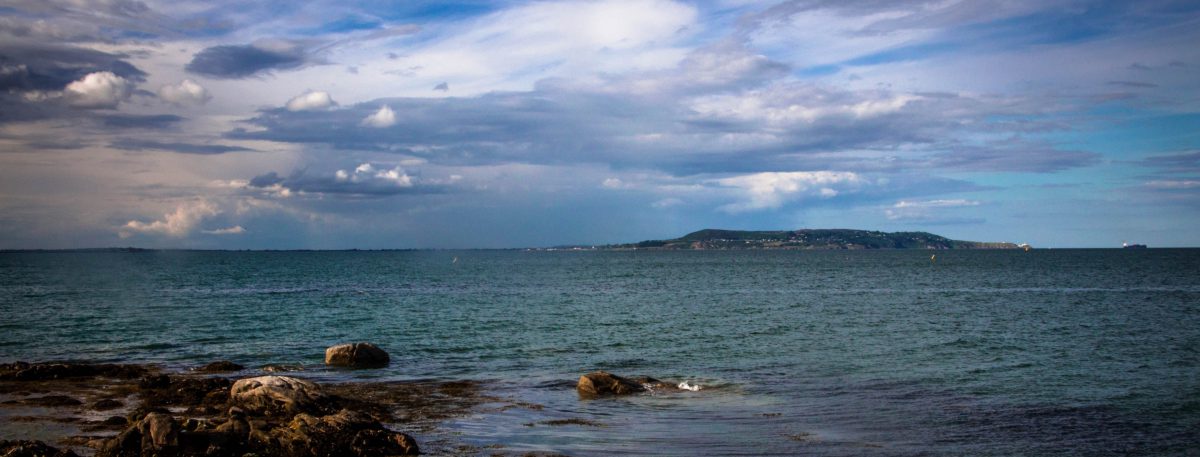

She’s bigger than you think, warmer than you’d expect and deeper than you’ll ever know but cross the whoor and she’ll have her way with you. Out here nature calls the tune and each of us must pick up an instrument and play in harmony. In an ocean based orchestra you need all the instruments. The constantly varying mosaic of the seas tunes calls for respect and insists that we follow her moods. A boat is like a living, breathing creature that knows the ocean and just like Jonah, we live inside the beast. Four crusty ‘oul men sharing a boat together is above all else an opportunity, a chance to solve global issues by seeing them clearly through a glass of Jameson’s or a bottle of 1664.
After a few days a symbiotic friendship develops, something that is rarely seen ashore. Of course there are times when things don’t work as you’d expect. For instance, it’s my firm belief that the person who coined the term ‘piss artist’ must have been a sailor. Taking aim at the Head in rough seas is an exercise akin to trying to understand the mind of Trump. Just when you think you have him sussed another tweet arrives, like a rogue wave throwing you off balance and once again forcing you to re-evaluate what you had previously thought was unacceptable. And yet, before long a routine builds. As we rise and fall on a tide of our own making, the ‘ing’s’ take over: cooking, eating, sleeping, laughing and sharing. Navigating is undoubtedly the most important. At some point we need to steer the boat back to shore because in the last 2,000 years only one person has ever managed to walk on water and to the best of my knowledge, that person is not a member of our crew.
Most journeys have memorable moments, small things that you are unlikely to forget. Gannets with eyelids pulled back diving at breakneck speed towards unsuspecting shoals of Herring or dolphins arriving from who knows where, twisting, turning and jumping for the sheer joy of it. They sniff and snort at our feeble attempts to be, as they are, at one with the ocean. Pilot Whales gently roll in, like the seas policeman, moving them along: “On you go, nothing to be seen here”. Having sailed across many oceans I always enjoy nature’s exuberance but I’m rarely surprised by it. People, on the other hand, constantly surprise me. In these more enlightened times, I might be considered ‘old school’ but I still reserve the right to be wary of a man who colours his bed sheets pink and then offers to share his bunk.
Thankfully major events seldom happen. On a boat it’s rare that you need outside intervention. Cocooned in a fiberglass shell, from the moment you slip the mooring you commit to a freedom cut off from the stresses and strains of land based living, unless nature decides otherwise or, through some misfortune, something breaks. Those who have never ventured beyond the end of Dun Laoghaire pier may not appreciate the need for an engine on a sailing boat, but without one, when the wind refuses to blow, you are limited to drifting like an ageing bachelor hill farmer in the wilds of Connemara. A working engine is even more essential when entering or leaving a port – particularly an unfamiliar one.
Five miles off Ribadeo on the north coast of Spain, leading lights, flashing green and red, guide us into a safe harbour and a welcome relief from the rising winds and seas. Ribadeo, I’ve really no idea what it means in Spanish but it sounds like it might have being named after a Galician God caught laughing at sailors paltry attempts to make landfall. Ribadeo, at 1 am in confused seas and gusts of 30 knots we begin our approach. Ribadeo, no one on the boat is laughing because the engine, our engine, has just coughed, spluttered and died.
It’s at moments like this I call on God, Mohammed, Vishnu and Buddha to give a helping hand but alas it seems that the All Knowing, All Seeing, All Powerful quartet know little about the workings of a 25 horse power Yanmar. The skipper shouts for me to ‘tickle the engine’. Thinking he wanted me to tell it a joke I say “did you hear the one about the boat engine that was demoted to a lawn mower. People said it was a cut above the rest”. But no, tickling an engine involves manually pumping the fuel through from the tank. It involves using two fingers to work a small lever up and down. Like masturbation, when you tickle an engine you need to work very fast, its best done in isolation and as with most solitary preoccupations, the positive effects don’t last very long.
Talk of sailing in, anchor at the ready and fenders deployed, seemed like Custer’s Last Stand against Crazy Horse and the combined forces of the American Tribes at Little Big Horn. Reminded of history our skipper radioed for reinforcements in the shape of Salvamento Maritimo, the Spanish Coast Guard. Armed with nothing more than a Monkeys Fist they heave us a line and tow us in, zig zag fashion, towards the beckoning green and red. Three hours later, alongside the holding berth, we toast new friends.
Stepping ashore we continue to sway. You’d be forgiven for thinking that it’s caused by the unfamiliarity of land. My belief is that it is the subconscious reminding us that our journey is ending, coupled with the innate reluctance that all sailors have to regain the perceived stability that land offers.
‘More Latitude’, Ribadeo Marina, Spain.
29th July 2017

 storiesfromadam